


"Curiosity is perhaps the essential form of longevity."
Longevity expert Nils Behrens on sleep, social connection, and the deep longing for a long life

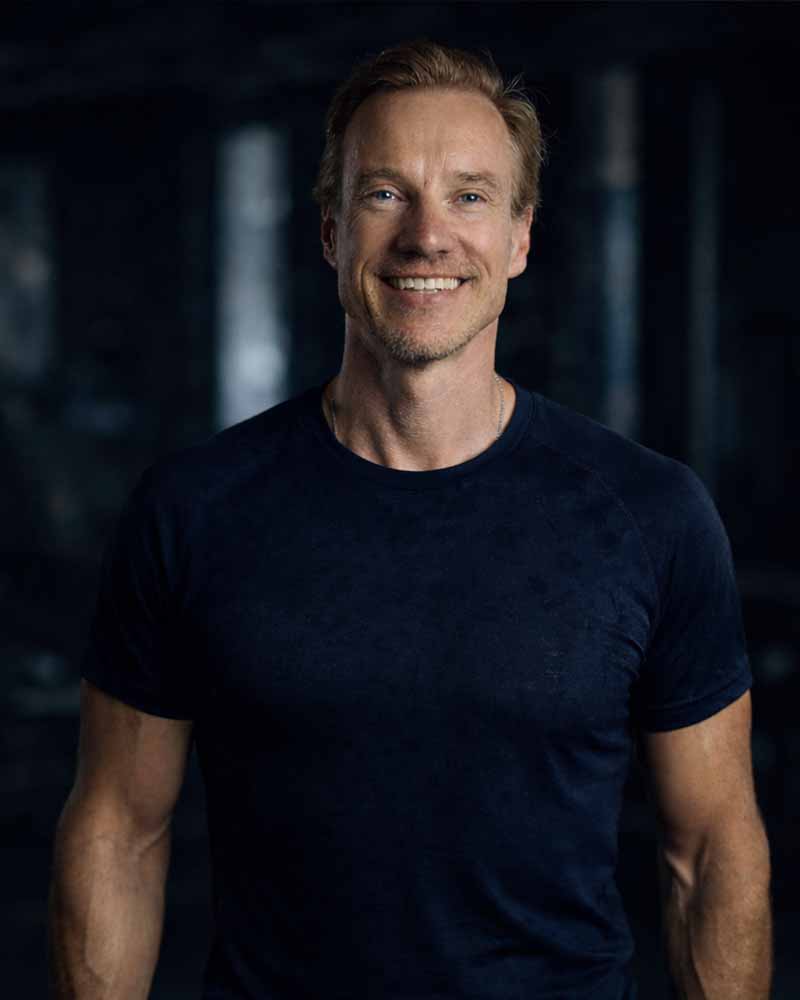
Source: Nils Behrens
Longevity expert Nils Behrens
Schloss Elmau: Mr. Behrens, your *Spiegel* bestseller *A Walk to Immortality* begins with the sentence: “I hate longevity.” That’s a bit surprising. Why start with that?
Nils Behrens: Of course, it’s also a bit of a provocation. But just a little one (laughs). I find the term “longevity” often misleading, because most people don’t just want to live longer. Nobody wants to spend as many years as possible dealing with illness or limitations. It’s really about living a healthy life for longer.Today, we distinguish between lifespan and healthspan. Lifespan simply describes the duration of life—that is, what’s written on a headstone: the dates of birth and death. Healthspan, on the other hand, describes the time during which we live healthy lives, free from age-related diseases. And it’s precisely this period that hasn’t been extending at the same rate as lifespan itself. That’s why I say: there’s little point in simply living longer. What matters is how we live.
What does that mean in concrete terms for everyday life?
Longevity often sounds like an apple tree you plant today to harvest the fruit sometime in twenty years. But that’s not what it’s about. It’s about doing things that improve your quality of life today—and maintain your health in the long run. For example: I worked out at lunchtime today—and I feel better afterward. Afterward, I ate a healthy protein porridge—and that, too, makes me feel better right away, compared to a currywurst.
Still, many people find it hard to stick with healthy habits over the long term. Why?
Because people rarely change their behavior unless they understand the reasoning behind it. If I simply say, “Exercise is healthy” or “healthy eating is important,” then of course everyone knows that. But that alone doesn’t change much. That’s why I try to put things in a different context. Sleep, for example, I like to call “repair.” Because that’s exactly what happens during sleep. When someone says, “I don’t prioritize my sleep,” it almost sounds heroic—as if to say, “I can sleep when I’m dead.” But when you understand that the body is repairing itself during this time, the whole thing takes on a different meaning.
Elmau Valley Castle
Source: Timo Maier
You often talk about sleep quality. Why is it so crucial?
Because the brain can only detoxify during deep sleep. During this phase, the brain actually shrinks slightly, thereby creating space to flush out metabolic byproducts. These include amyloid-beta, which is strongly linked to Alzheimer’s disease. That’s why it’s not enough to simply sleep for eight hours. What matters is the quality of sleep. Alcohol, caffeine late in the day, stress, intense exercise in the evening, or too much light can severely impair deep sleep. Many people don’t even notice this because they have no trouble falling asleep or staying asleep. Very few people are aware of their actual sleep quality.
Another major theme in your book is social relationships.
Yes, because we are social beings. There is a cruel historical experiment conducted by Frederick the Great: He had orphans cared for—providing them with food and care—but denied them physical contact, closeness, and language. All the children died. This shows just how essential closeness is to us. Oxytocin, which is released during hugs, plays an enormous role in this. It takes about thirty seconds of hugging or seven seconds of kissing to trigger a noticeable release of oxytocin. Older people in particular often suffer from this, since they lack this closeness.
Loneliness is now even considered a health risk.
Absolutely. Studies show that loneliness is about as unhealthy as smoking fifteen cigarettes a day. But even if you don’t know that number, you intuitively understand what happens: When there’s no one to get up for in the morning, a lot of things lose their meaning. People pay less attention to their diet, exercise less, and often lose the motivation to take good care of themselves. That’s why I always say: You should invest in the three Fs: family, friends, and strangers. The latter means staying open to new people and encounters.
Many people today associate longevity with high-tech solutions, supplements, and expensive treatments. Is healthy aging a luxury?
No, not at all. I’d say: Eighty percent of what really matters costs almost nothing. Exercise, sleep, breathing, social connections—all of that is fundamentally accessible. The expensive twenty percent consists of biohacks, treatments, or special supplements. But many people focus precisely on this twenty percent because it seems easier. Yet it often takes much less than you think. For exercise, good running shoes are enough. Nutrition doesn’t have to be complicated. Frozen vegetables can even be more sensible and cheaper than some fresh produce.
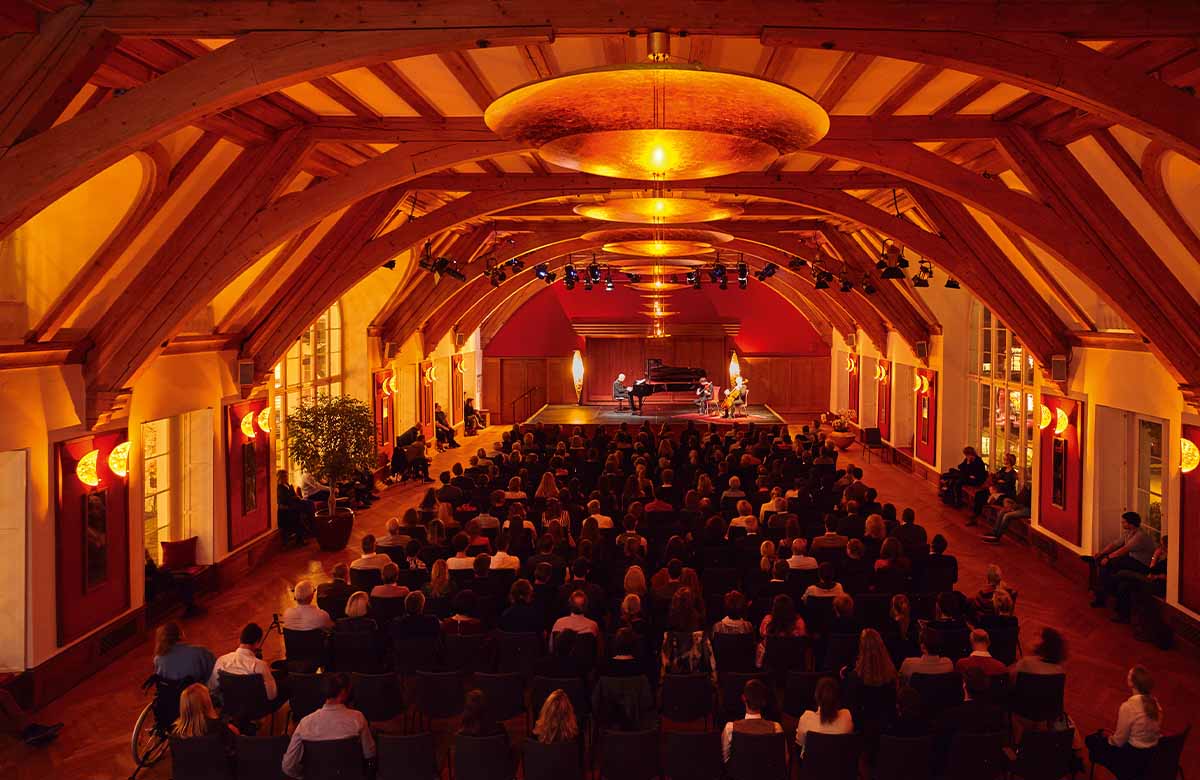
Source: Leopold Fiala
Concert Hall, Hideaway
At Schloss Elmau, we view longevity less as a biohacking trend and more as a matter of mindset. How important are classical music and dancing—in other words, “food for thought”?
Mental health is an enormously important factor,and anything that is good for us emotionally ultimately has a positive impact on our health as well. It’s not just about traditional relaxation, but also about challenging the brain and staying curious. We now know, for example, that dancing can have a very positive effect on the brain. Dancing the waltz, for instance, combines movement, coordination, and rhythm. That challenges the mind enormously. A neurologist once told me that even walking twenty steps backward a day is good exercise for the brain because it forces us to break out of our usual movement patterns. Anything that challenges the brain ultimately has a protective effect.
What role does inflammation play in aging?
Inflammation is actually one of the main reasons we age. It plays an enormous role and is influenced primarily by two factors: diet and stress. But our diet isn’t set in stone. Even if you took three “wrong” turns yesterday, you have the chance today to make a different choice. That’s exactly where the great opportunity lies.
Why are we actually so fascinated by the idea of living longer?
The desire for a long life—or even immortality—is probably as old as humanity itself. As far back as the Middle Ages, people tried to slow down aging with all sorts of potions. What’s new, however, is that today, for the first time, we truly understand why we age. There are now the so-called “Hallmarks of Aging”—twelve biological mechanisms that are said to explain the aging process. An intriguing example of this is what are known as senescent cells, often referred to as “zombie cells.” I like to explain this using a supermarket parking lot as an analogy: Normally, cells come and go constantly—like cars that park briefly and then disappear again. Senescent cells, on the other hand, simply stay put, even though they have long since fulfilled their purpose. They block parking spaces and, on top of that, release substances that can promote inflammation. Today, intensive research is being conducted to specifically eliminate these cells—for example, using so-called senolytics. At the same time, however, we know that these cells apparently don’t only have drawbacks. For instance, they can also prevent cancer cells from spreading uncontrollably. And that’s exactly what makes the topic of longevity so fascinating: We’re understanding more and more about the human body—but at the same time, we’re realizing just how complex aging actually is.
What would you say: What is the most important attitude behind all of this?
Curiosity. Without a doubt. Children are naturally curious, but at some point, that curiosity is often weaned out of them. Yet it is precisely this openness to new things that is incredibly healthy. People who remain curious usually stay mentally alert as well. Perhaps, in the end, that is the true form of longevity: not living as long as possible—but remaining open, interested, and connected to life for as long as possible.
You might also be interested in:

- Source: Christian Krinninger

- Source: Leopold Fiala